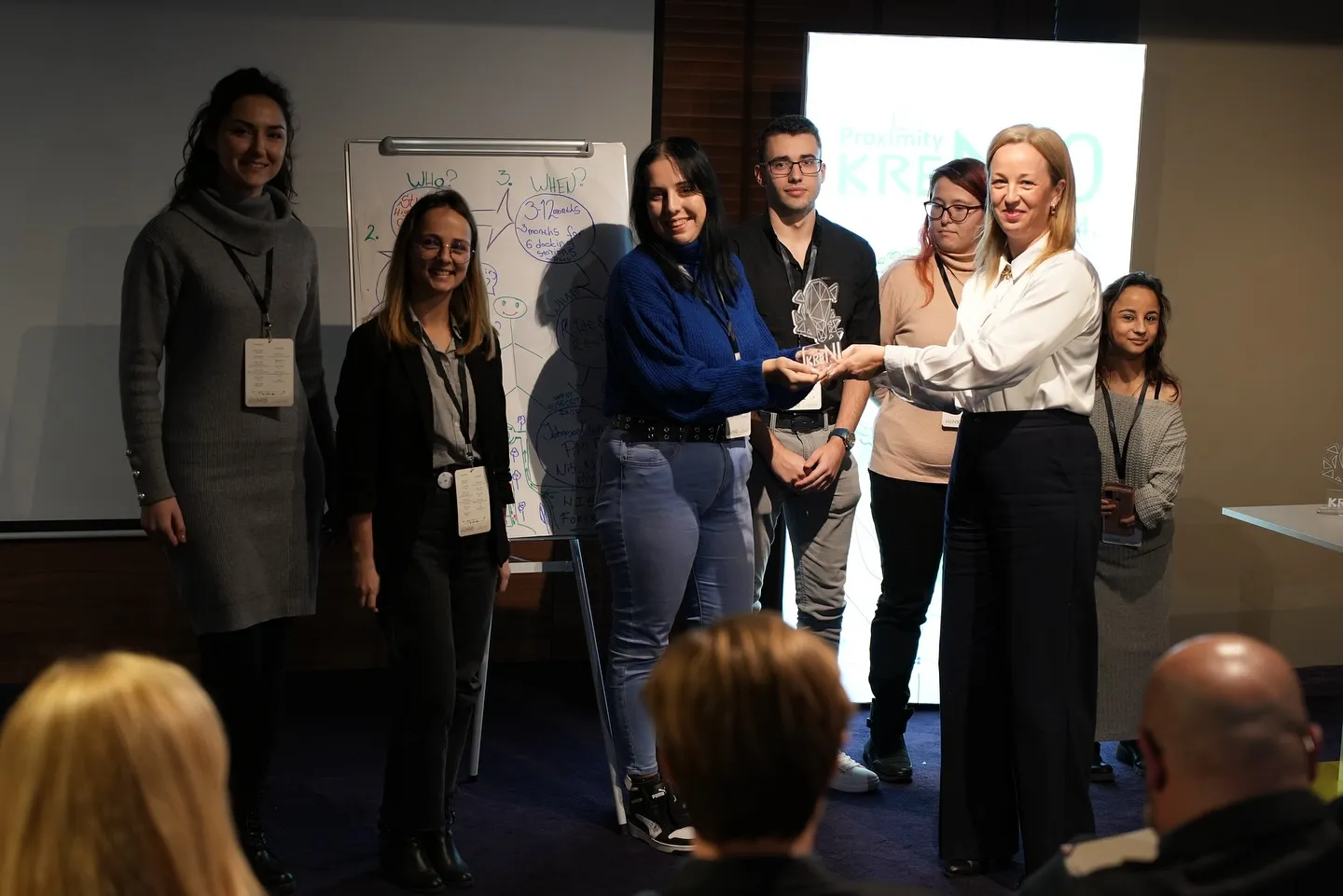
In the story of KreNI Startup, women are not just participants—they are driving forces. From leading idea development in Niš to pitching tech solutions in Ohrid, female innovators, mentors, and organizers played a central role in the initiative’s success.
Gender Equality as a Core Principle
Gender equality and women’s empowerment were actively incorporated into every stage of the project. A deliberate effort was made to ensure balanced representation among participants, speakers, mentors, and jury members.
At the KreNI Conference, 36 out of 62 youth participants were female. At Startup Weekend Ohrid, women made up 21 of the 60 registered participants. Beyond just numbers, women held prominent roles in panels and leadership, ensuring their influence in decision-making. Project activities were designed to create inclusive spaces where young women could freely express ideas, lead teams, and present solutions. The fact that women were part of the winning teams at both events is a clear demonstration of the project’s success in building confidence and entrepreneurial skills among young women.
Women as Founders
At Startup Weekend Ohrid, several standout projects were led or co-led by women. The Smart Pill team—a health-tech solution for elderly medication management—was co-founded by a female participant who combined her medical expertise with entrepreneurial drive.
The Take It Back initiative, which received the Special City of Niš Award at KreNI10, also had strong female leadership. Their work on revitalizing a Niš neighborhood is rooted in community engagement and intergenerational collaboration, a perspective that highlights the unique strengths women bring to social innovation.
The Future Is Inclusive
While the Western Balkans has no shortage of talented women, cultural and systemic barriers still limit their participation in entrepreneurship. KreNI Startup’s inclusive approach—ensuring balanced participation, promoting women to visible leadership roles, and actively recruiting female mentors—is a crucial step toward changing that.
The initiative’s final publication calls for continued investment in women’s leadership as a key factor in building resilient cultural-startup ecosystems. In this ecosystem, inclusion is not an add-on; it is the essential foundation for creativity and sustainable growth.
The Culture and Creativity for the Western Balkans (CC4WBs) is a project funded by the European Union. Its mission is to foster dialogue and enhance socio-economic impact by strengthening the cultural and creative sectors across the Western Balkans. Over a 48-month period, the project aims to improve skills, increase knowledge, and provide financial support to boost competitiveness and promote the co-production and circulation of goods and services within the region.